Sets
127 Inhalte
- Seite 1 von 11
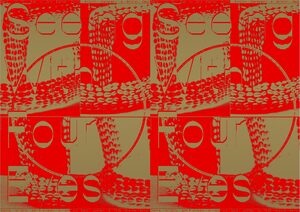
Seeing With Four Eyes
Name that can easily go onto 2 lines
Author that can easily go onto 2 lines as well
- Titel
- Seeing With Four Eyes
- Titel (en)
- Seeing With Four Eyes
- Autor/in
- Beschreibung (de)
- Die Ausstellung "Seeing With Four Eyes" verfolgt die Objektbiografie der Statue Ngonnso' aus Kamerun durch verschiedene geografische, zeitliche und institutionelle Kontexte. Dieser erste Satz ist bereits fehlerhaft. Ist Statue überhaupt ein angemessener Begriff, um eine Figur zu beschreiben, die für die einen ein Lebewesen darstellt, während andere sie lediglich als Beispiel für materielle Kultur betrachten? Und ist Biografie der richtige Begriff, um das Leben eines Artefakts zu beschreiben? Ist sie an ihr materielles Wesen gebunden oder existiert sie schon lange bevor sie aus Holz geschnitzt wurde und lange nachdem sie von Termiten gefressen wurde oder in einem brennenden Museum verloren ging? In dem Bestreben, mehr über Ngonnso' zu erfahren, beschloss ich, sie bei ihrem Namen zu nennen und damit nicht vorzuschreiben, was sie ist. Ich habe versucht, die Fragmente einer Geschichte zu sammeln, die sich nicht zu einem Ganzen zusammenfügen lassen. Ich verfolgte Fäden, die bis zur Entstehungszeit zurückreichen, zu Strafexpeditionen und Kriegshandlungen des deutschen Kolonialreichs, zu Kulturfesten in Kamerun und Europa und zu einem Museum, das versucht, mit seiner Sammlung zurechtzukommen. Ich habe mit Menschen gesprochen, die sich entweder mit Ngonnso' selbst oder mit den Kampagnen, nationalen Gesetzen und der Politik beschäftigt haben, die sie beeinflusst haben und weiterhin beeinflussen. Ngonnso' befindet sich in einem Schwebezustand: Sie wird im Frühjahr 2019 von einem Museumsdepot am Rande Berlins in eine neue Museumseinrichtung im Stadtzentrum transportiert und damit erneut von einem gelagerten Objekt in ein Ausstellungsobjekt verwandelt. Zugleich ist sie Gegenstand laufender Restitutionsverhandlungen zwischen dem Oberhäuptling des Königreichs Nso', Fon Sehm Mbinglo I, dem Staat Kamerun, dem Ethnologischen Museum Berlin und dem deutschen Staat. "Seeing With Four Eyes" bietet einen Raum, um über diese Einheit in ihren vielfältigen und widersprüchlichen Dimensionen zu reflektieren.
- Beschreibung (en)
- The exhibition "Seeing With Four Eyes" follows the object biography of the statue Ngonnso’ from Cameroon through different geographical, temporal and institutional contexts. This first sentence is already flawed. Is statue even an adequate term to describe a figure that represents a living being to some people, while others merely see it as an example of material culture? And is biography the right term to describe the life of an artifact? Is it bound to its material being or does it exist well before it is carved out of wood and long after it is eaten by termites or lost in a burning museum? In the endeavour to learn more about Ngonnso’, I decided to call her by her name, thereby not predefining what she is. I tried to gather the fragments of a story that do not form a whole. I followed threads that go back to the time of creation, to punitive expeditions and acts of war carried out by the German colonial empire, cultural festivals in Cameroon and Europe, and to a museum trying to come to terms with its collection. I talked to people who have engaged either with Ngonnso’ herself or with the campaigns, national laws, and politics that have influenced and continue to influence her. Ngonnso’ is in a state of limbo: she will be transported from a museum depot in the outskirts of Berlin to a new museum institution in the city centre in the spring of 2019, once again being transformed from a stored object into an exhibition object. At the same time, she is subject of ongoing restitution negotiations between the paramount chief of the kingdom Nso’, Fon Sehm Mbinglo I, the state of Cameroon, the Ethnological Museum Berlin and the German state. "Seeing With Four Eyes" offers a space to reflect upon this entity through its multiple and contradictory dimensions.
- Typ des Projekts/Werks
- Schlagworte
- Datierung
- 14.11.2018 - 16.11.2018
- Sprache
- Ort: Institution
- Ort
- Lichtbrücke
- Stadt
- Land
- Titel
- Seeing With Four Eyes
- Projektleiter/in
- Semester
- Studiengang
- Typ der Abschlussarbeit
- Importiert am
- 24.05.2023
- Übergeordnete Sets
- 2
- Set enthält
- 0 5
I used to think that I was made of Stone (Ich dachte immer, ich sei aus Stein)
Name that can easily go onto 2 lines
Author that can easily go onto 2 lines as well
- Titel
- I used to think that I was made of Stone (Ich dachte immer, ich sei aus Stein)
- Titel (en)
- I used to think that I was made of Stone
- Autor/in
- Beschreibung (de)
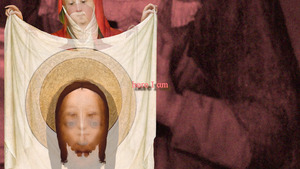
- Die multimediale Installation “I used to think that I was made of Stone” verhandelt, wie Lücken und Ausschmückungen unsere Realitäten in der Gegenwart formen und welche Geschichten und Nacherzählungen sie produzieren. Dabei fragt es nach den Übersetzer*innen, die diese wortwörtlich über-setzen, weiter-tragen und fort-spinnen.
- Beschreibung (en)
- The multimedia installation “I used to think that I was made of Stone” negotiates how gaps and embellishments shape our realities in the present and what stories and retellings they produce. In doing so, it asks about the translators who literally translate, carry on and spin these stories.
- Kategorie
- Datierung
- Februar 2023
- Mitwirkende
- Ort: Institution
- Stadt
- Land
- Titel
- I used to think that I was made of Stone (Ich dachte immer, ich sei aus Stein)
- Projektleiter/in
- Semester
- Studiengang
- Typ der Abschlussarbeit
- Importiert am
- 25.06.2024
- Übergeordnete Sets
- 0
- Set enthält
- 0 12
an invitation to an exhibition in a laundry
Name that can easily go onto 2 lines
Author that can easily go onto 2 lines as well
- Titel
- an invitation to an exhibition in a laundry
- Titel (en)
- an invitation to an exhibition in a laundry
- Autor/in
- Beschreibung (de)
- "an invitation to an exhibition in a laundry" (eine Einladung zu einer Ausstellung in einer Wäscherei) fand in einer Wäscherei und einem Hinterhof in Karlsruhe statt, einem Raum, der bisher nur für private Zwecke genutzt wurde. Das 18-tägige Programm erzählt von der alltäglichen und handwerklichen Arbeit der Wäscher*innen und dem Stigma, dem sie ausgesetzt sind. Das Waschen der Wäsche wird zu einem Referenzraum, um sich mit der Schnittstelle von Care-Arbeit und Lohnarbeit auseinanderzusetzen.
- Beschreibung (en)
- "an invitation to an exhibition in a laundry" took place in a laundry room and backyard in Karlsruhe, a space that has only been used for private purposes. The program that lasted 18 days tells of common and manual work of washerwomen* and the stigma they are exposed to. Doing the laundry becomes a reference space to engage with the intersection of care work and wage labour.
- Kategorie
- Schlagworte
- Mitwirkende
- Titel
- an invitation to an exhibition in a laundry
- Projektleiter/in
- Semester
- Studiengang
- Typ der Abschlussarbeit
- Importiert am
- 24.06.2024
- Übergeordnete Sets
- 0
- Set enthält
- 0 1
Nichts, was uns passiert oder Genügend Anlass zur Erhebung der öffentlichen Klage
Name that can easily go onto 2 lines
Author that can easily go onto 2 lines as well
- Titel
- Nichts, was uns passiert oder Genügend Anlass zur Erhebung der öffentlichen Klage
- Titel (en)
- Nothing that happens to us or sufficient reason to file a public complaint
- Untertitel
- Hörstück und (Körper)Übung eines Dialogs
- Untertitel des Projekts/Werks (en)
- Audio piece and (physical) exercise of a dialog
- Autor/in
- Beschreibung (de)
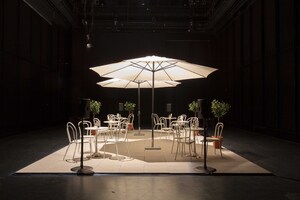
- Die Arbeit „Nichts, was uns passiert“ oder „Genügend Anlass zur Erhebung der öffentlichen Klage“ thematisiert den Umgang mit sexueller Gewalt in unserer Gesellschaft. Sie fragt, wie und vor allem ob wir durch unsere Sozialisierung gelernt haben über sexuelle Gewalt zu sprechen. Sie fragt nach dem Vermögen, uns diese Art von Gewalt in unserem eigenen Umfeld (Familie, Freundeskreis, Arbeitsgemeinschaft, u.a.) vorzustellen und danach, warum Erzählungen über sexuelle Gewalt meist in der Ferne, im Abstrakten verortet werden.
- Beschreibung (en)
- The work "Nichts, was uns passiert" (Nothing that happens to us) or "Genügend Anlass zur Erhebung der öffentlichen Klage" (sufficient reason to file a public complaint) addresses how we deal with sexual violence in our society. It asks how and, above all, whether we have learned to talk about sexual violence through our socialization. It asks about our ability to imagine this kind of violence in our own environment (family, circle of friends, work community, etc.) and why stories about sexual violence are usually located in the distance, in the abstract.
- Kategorie
- Schlagworte
- Mitwirkende
- Titel
- Nichts, was uns passiert oder Genügend Anlass zur Erhebung der öffentlichen Klage
- Projektleiter/in
- Semester
- Studiengang
- Typ der Abschlussarbeit
- Importiert am
- 24.06.2024
- Übergeordnete Sets
- 0
- Set enthält
- 0 4
calidum glacies
- Titel
- calidum glacies
- Titel (en)
- calidum glacies
- Untertitel
- Eine künstlerisch - wissenschaftliche Reflexion des Abschmelzens des Hallstätter Gletschers
- Untertitel des Projekts/Werks (en)
- An artistic and scientific reflection on the melting of the Hallstatt glacier
- Autor/in
- Beschreibung (de)
- Das „Gletschersterben“, der Totalverlust der eisigen Welt in den Alpen ist ein präsentes Thema in unseren Medien. Die Ausstellung „calidum glacies – Distanz des Verschwindens“ präsentiert die einjährige Research Arbeit von der Vermessung des Hallstätter Gletschers über die Archivarbeit bis hin zur Betrachtung der Abdeckung der Gletscher, welche als „Skin of the Anthropocene“ bezeichnet wird.
- Beschreibung (en)
- The "glacier extinction", the total loss of the icy world in the Alps, is a topic that is present in our media. The exhibition "calidum glacies - Distance of Disappearance" presents the year-long research work from the measurement of the Hallstatt glacier to the archive work and the observation of the glacier cover, which is referred to as the "Skin of the Anthropocene".
- Kategorie
- Schlagworte
- Datierung
- 17.06.2023 - 21.06.2023
- Mitwirkende
- Dauer
- 17.06.2023 – 21.06.2023
- Ort: Institution
- Ort
- Großes Studio
- Stadt
- Land
- Internetlinks
- Titel
- calidum glacies
- Projektleiter/in
- Semester
- Studiengang
- Typ der Abschlussarbeit
- Importiert am
- 19.06.2024
- Übergeordnete Sets
- 0
- Set enthält
- 0 0
Seminar School of Casablanca
- Titel
- Seminar School of Casablanca
- Kategorie
- Mitwirkende
- Titel
- Seminar School of Casablanca
- Importiert am
- 18.06.2024
- Übergeordnete Sets
- 0
- Set enthält
- 0 0
ECHOS AND ARCHIVES Part II: Im Strudel der Daten und flüchtigen Scheine
Name that can easily go onto 2 lines
Author that can easily go onto 2 lines as well
- Titel
- ECHOS AND ARCHIVES Part II: Im Strudel der Daten und flüchtigen Scheine
- Autor/in
- Beschreibung (de)
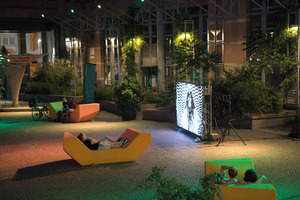
- Das Künstler*innen Kollektiv Francis Karat mobilisiert für die Bunte Nacht der Digitalisierung KI-Modelle und lässt sie die Abstraktionen der Verwaltung 4.0 halluzinieren. Die Gedanken eines Maschinenaufsehers aus der Zukunft verlieren sich in einer futuristischen Reimagination des Markerschen Fotoromans. Durch ein Rearrangement der bekannten gelben Straßenblockaden bricht die Geschichte aus der Leinwand heraus und interagiert mit dem Kronenplatz.
- Kategorie
- Typ des Projekts/Werks
- Schlagworte
- Datierung
- 07.06.2024
- Ort: Institution
- Ort
- Kronenplatz
- Stadt
- Land
- Beteiligte Institution(en)
- Titel
- ECHOS AND ARCHIVES Part II: Im Strudel der Daten und flüchtigen Scheine
- Importiert am
- 05.06.2024
- Übergeordnete Sets
- 1
- Set enthält
- 0 32
A Factor of Evolution - Triangel Studio
Name that can easily go onto 2 lines
Author that can easily go onto 2 lines as well
- Titel
- A Factor of Evolution - Triangel Studio
- Titel (en)
- A Factor of Evolution - Triangel Studio
- Autor/in
- Beschreibung (en)
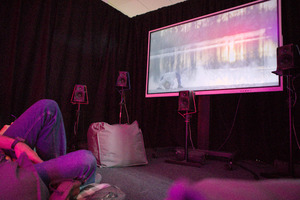
- We live in times of high competition. Survival of the fittest is the omnipresent motto in most fields of human action, especially in the western world. This philosophy was only established about 200 years ago and manifested by Charles Darwin and especially the Social Darwinists at the end of the 19th century. They believed that according to a law of nature, only the physically strongest and most aggressive individuals and species would survive in the struggle for life. Many Social Darwinists justified therefore capitalism and racism with devastating consequences in the coming decades until nowadays.
Peter Kropotkin is attempting in his philosophical work Mutual Aid: A Factor of Evolution (1902) to dismantle their arguments and based on numerous observations of zoologists and anthropologists, he proves, that the fittest species are the most sociable ones and that sociability develops intelligence, which is the most powerful arm in the struggle for survival. This includes insects, animals and humans. Higher moral sentiments and compassion is also essential for survival in all societies.
The ritual burning of sage in nature should help to cleanse the negative energy of social darwinism in our world and make room for a more cooperative society, that will secure the well-being of all members, even the most weak ones and furthermore facilitate a more sustainable, safe and content society.
- We live in times of high competition. Survival of the fittest is the omnipresent motto in most fields of human action, especially in the western world. This philosophy was only established about 200 years ago and manifested by Charles Darwin and especially the Social Darwinists at the end of the 19th century. They believed that according to a law of nature, only the physically strongest and most aggressive individuals and species would survive in the struggle for life. Many Social Darwinists justified therefore capitalism and racism with devastating consequences in the coming decades until nowadays.
- Typ des Projekts/Werks
- Schlagworte
- Datierung
- 07.06.2024
- Mitwirkende
- Beteiligte Institution(en)
- Titel
- A Factor of Evolution - Triangel Studio
- Importiert am
- 05.06.2024
- Übergeordnete Sets
- 1
- Set enthält
- 0 14
Material Practice: Hyper Materials - Triangel
Name that can easily go onto 2 lines
Author that can easily go onto 2 lines as well
- Titel
- Material Practice: Hyper Materials - Triangel
- Titel (en)
- Material Practice: Hyper Materials - Triangel
- Autor/in
- Beschreibung (de)
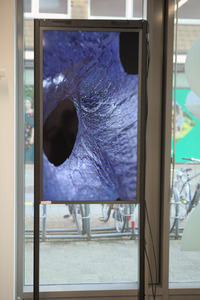
- Material Practice ist eine Reihe von Kunstwerken, die sich auf transformative Materialien und Texturen konzentrieren und diese durch eine soziologische Linse untersuchen. Die von uns untersuchten und verwendeten Materialien sind Nickel, Metall und Erde, die die Grundlage für alles sind, was wir finden können, unabhängig davon, wo wir uns befinden.
Unser Begriff "Hyper Materials" dreht sich um Solidarität, unabhängig von der individuellen Herkunft, und wurde von der Solidarität in der Kultur und der Gemeinschaft inspiriert, die sich auf die Rave-Kultur, den Tanz, Musikstile mit materialistischen Merkmalen usw. bezieht.
Wir haben eine Verbindung gefunden, die sich um Befreiung und die Förderung einer einladenden Gemeinschaft für Minderheiten dreht und sich auf die Menschlichkeit konzentriert, und haben dann die spezifischen Merkmale gesammelt und kombiniert. Verzerrte und glitchige Texturen scheinen nicht das zu sein, was sie sind, sondern deuten letztlich auf sich selbst hin.
- Material Practice ist eine Reihe von Kunstwerken, die sich auf transformative Materialien und Texturen konzentrieren und diese durch eine soziologische Linse untersuchen. Die von uns untersuchten und verwendeten Materialien sind Nickel, Metall und Erde, die die Grundlage für alles sind, was wir finden können, unabhängig davon, wo wir uns befinden.
- Beschreibung (en)
- Material Practice is a series of artworks that focus on transformative materials and textures, researching them through a sociological lens. The materials we researched and used are nickel, metal, and earth, which are the basis of everything we can find regardless of where we are.
Our term “Hyper Materials” centres on solidarity regardless of individual backgrounds and has been inspired by solidarity in the culture and community, which relates to rave culture, dance, music styles with materialistic features, and so on.
We found a connection that revolves around liberation and fostering a welcoming community for minorities, focusing on humanity, and then collected and combined the specific features. Distorted and glitchy textures do not seem to be what they are but indicate themselves in the end.
- Material Practice is a series of artworks that focus on transformative materials and textures, researching them through a sociological lens. The materials we researched and used are nickel, metal, and earth, which are the basis of everything we can find regardless of where we are.
- Typ des Projekts/Werks
- Schlagworte
- Datierung
- 07.06.2024
- Technik/Verfahren/Formate
- 4 Displays Installation
- Beteiligte Institution(en)
- Titel
- Material Practice: Hyper Materials - Triangel
- Importiert am
- 05.06.2024
- Übergeordnete Sets
- 1
- Set enthält
- 0 23
After Fire_ Birch Chair
- Titel
- After Fire_ Birch Chair
- Titel (en)
- Birch Chair
- Beschreibung (de)
- Birch Chair follows a holistic approach and combines modern and traditional birch processing methods. Seats are molded and glued in the same way as the main use of birch wood today in veneer panels. All legs are milled.
Wood joints are clued with birch pitch created from the bark by thermal energy of the smaller knots.
The resulting black outlines on the iconic round joints are an analogy to a traditional way of working with fire as a tool.
- Birch Chair follows a holistic approach and combines modern and traditional birch processing methods. Seats are molded and glued in the same way as the main use of birch wood today in veneer panels. All legs are milled.
- Beschreibung (en)
- Birch Chair follows a holistic approach and combines modern and traditional birch processing methods. Seats are molded and glued in the same way as the main use of birch wood today in veneer panels. All legs are milled.
Wood joints are clued with birch pitch created from the bark by thermal energy of the smaller knots.
The resulting black outlines on the iconic round joints are an analogy to a traditional way of working with fire as a tool.
- Birch Chair follows a holistic approach and combines modern and traditional birch processing methods. Seats are molded and glued in the same way as the main use of birch wood today in veneer panels. All legs are milled.
- Kategorie
- Typ des Projekts/Werks
- Schlagworte
- Datierung
- 01.04.2023
- Mitwirkende
- Material
- Stadt
- Titel
- After Fire_ Birch Chair
- Projektleiter/in
- Studiengang
- Importiert am
- 14.06.2024
- Übergeordnete Sets
- 1
- Set enthält
- 0 0
FLAME SPRAYED
Name that can easily go onto 2 lines
Author that can easily go onto 2 lines as well
- Titel
- FLAME SPRAYED
- Autor/in
- Beschreibung (de)
- FLAME SPRAYED
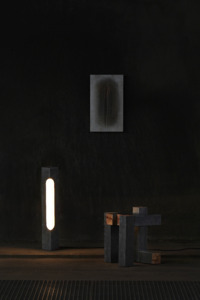
Metall und Holz sind einander nicht fremd. Eisennägel halten seit Jahrhunderten Holzstücke zusammen. Aber was passiert, wenn diese uralte Verbindung aus einer mechanischen zu einer alchemistischen Einheit wird? Die Antwort liegt nicht in der mittelalterlichen Zauberei, sondern in einem industriellen Hightech-Verfahren. Das Metallflammspritzen geht auf Beobachtungen zurück, als Munition mit den Objekten verschmolz, auf die sie abgefeuert wurde, und hat sich zu einer Technik entwickelt, die in spezialisierten Werkstätten vor allem für den Korrosionsschutz von Metallen eingesetzt wird. Bei der Arbeit mit einem Metallsprüher fielen mir die Holzabschnitte auf, die als Träger für die besprühten Objekte verwendet wurden, sie wirkten wie metallisiert.
Der Spiegel, die Lampe und der Hocker der Serie FLAME SPRAYED reflektieren die hybriden Eigenschaften des Materials: Eine spiegelartig polierte Holzmaserung, ein in Stücke geschnittener Balken mit offenen Enden und eine leitfähige Holzoberfläche, die als Schalter fungiert.
- FLAME SPRAYED
- Beschreibung (en)
- FLAME SPRAYED
Metal and wood are no strangers to each other. Iron nails have been holding pieces of wood together for centuries. But what happens when this age-old bond gets transforms from a mechanical to an alchemical unison? The answer doesn't come from medieval wizardry but from a high-tech industrial process. Metal Flame Spraying dates back to observations, when ammunition fused with the objects it was fired at, developed into a technique that sits tucked away in specialised workshops primarily used for metal corrosion protection. Working with a metal-sprayer, I noticed the sacrificial wood offcuts being used as supports for the sprayed objects, and was caught by their unexpected appeal when seemingly metallified.
The mirror, lamp and stool of the series FLAME SPRAYED reflect the hybrid properties of the material: A mirror-like polished wood grain, a beam cut into pieces with open ends and a conductive wooden surface that acts as a switch.
- FLAME SPRAYED
- Kategorie
- Typ des Projekts/Werks
- Schlagworte
- Datierung
- 2023/24
- Material
- Abmessungen
- Mirror 57 x 33 x 3 cm, Stool (open ends) 49 x 40 x 40 cm, Lamp 100 x 12 x 12 cm
- Ort
- ?
- Stadt
- Land
- Bemerkungen
- Mein Projekt FLAME SPRAYED hat im Afterfire Seminar WS22/23 begonnen (Januar 2023 Projekt start) und ist danach zu einem freien Projekt geworden, an dem ich jetzt noch arbeite.
- Titel
- FLAME SPRAYED
- Projektleiter/in
- Studiengang
- Importiert am
- 07.06.2024
- Übergeordnete Sets
- 1
- Set enthält
- 0 6
Flyer/ Poster
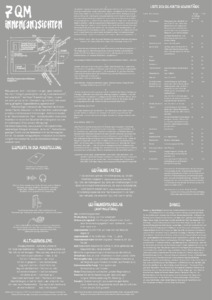
Name that can easily go onto 2 lines
Author that can easily go onto 2 lines as well
- Titel
- Flyer/ Poster
- Titel (en)
- 7sqm - inside views
- Autor/in
- Titel
- Flyer/ Poster
- Semester
- Studiengang
- Typ der Abschlussarbeit
- Importiert am
- 26.07.2023
- Übergeordnete Sets
- 1
- Set enthält
- 0 5